Two heated garments may both be specified to reach 50°C or 55°C. That makes them look easy to compare, but the figures may come from different heating systems, configurations or measurement contexts.
Two heated-garment temperature claims are meaningfully comparable only when the buyer understands what the figures represent, the heating systems behind them, the evidence or measurement context, and how those systems are integrated into the garments.
For a buyer, the useful question is therefore not simply which garment reaches the higher temperature. It is what the number represents, what supports it, and whether the same heating behaviour still makes sense once the system is integrated into the intended garment.
What Is Behind the Temperature Figure?
A heating temperature is a result produced by a particular system. Knowing the number alone does not explain how evenly the system heats, how it is controlled or what configuration produced that result.
The material name does not answer those questions either.
Carbon fiber, graphene and carbon-nanotube film can all be used in wearable heating systems. Varytex has evaluated carbon-fiber, graphene and carbon-nanotube-film heating solutions in its heated-apparel work.
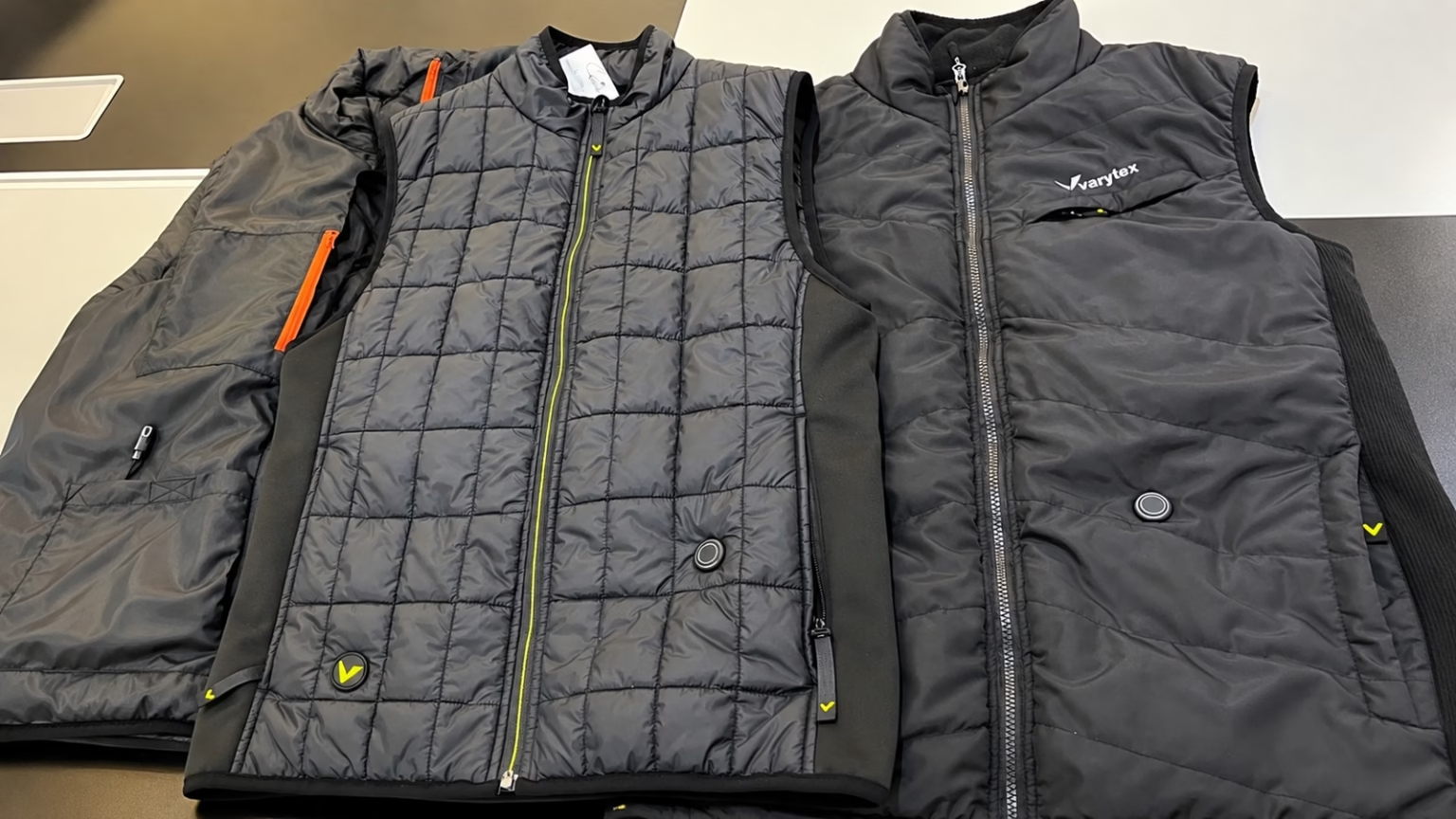
Varytex also has bulk-production experience with heated jackets, bodywarmers, sweatshirts and pants.
In practice, we do not compare heating solutions only by asking which one reaches the highest temperature. Price, heating-element safety, temperature uniformity and whether zoned control is possible can also matter when comparing solutions.
In the heated-apparel systems Varytex has worked with, we currently prefer CNT-film heating elements, while still evaluating the complete system against the requirements of the garment and the project.
This is why two proposals showing the same maximum temperature should not automatically be treated as equivalent. The number is only one characteristic of the system behind it.
Before Comparing the Numbers, Check How They Were Established
A temperature such as 55°C looks precise, but buyers still need to know what it describes.
Is it a maximum temperature or a target operating temperature? Which heating setting was used? Does the figure describe a measurement at one point, a heating area or something else? Was it established on the heating component or after integration into a garment?
The source of the information matters as well.
A supplier specification, supporting test information for a heating component and an evaluation of an integrated garment may describe different products, configurations or evidence scopes.
Before comparing two figures, two practical questions are therefore useful:
What exactly was tested or measured to produce this temperature figure?
What product or configuration does the supporting evidence actually represent?
If those answers are different, the fact that two proposals show the same number may have limited value as a direct comparison.
The Comparison Changes Once the Heating System Enters the Garment
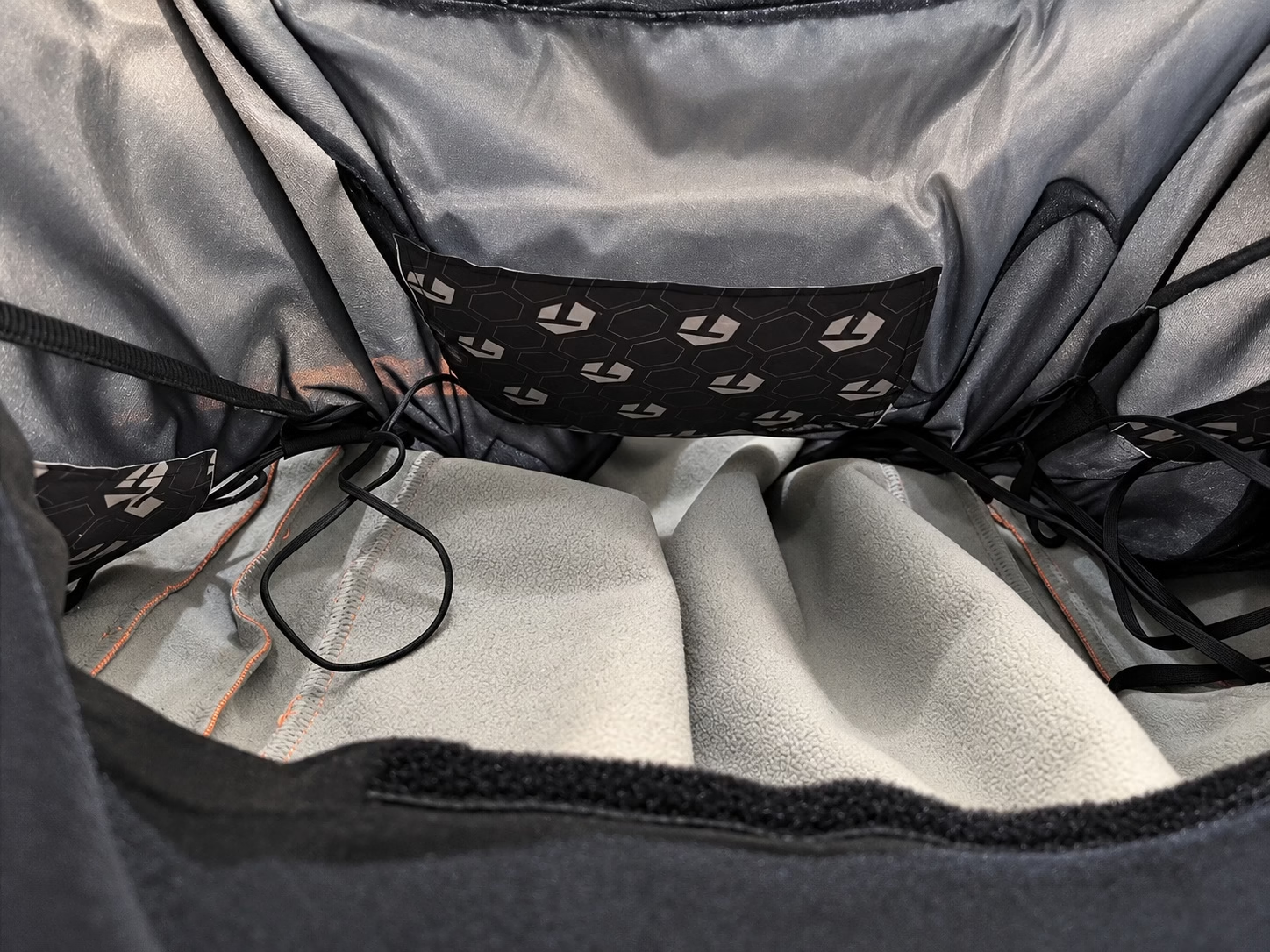
For a garment manufacturer, selecting the heating system is only part of the development work.
Once the system is incorporated into a jacket, bodywarmer, sweatshirt or trousers, it has to work with the construction of that particular garment. In Varytex’s development experience, factors such as lining thickness and garment design can affect heating behaviour after integration.
The heating zones also need to fit the intended product. Wiring and control components need suitable locations, while pockets and other garment features still have to perform their original functions.
This means a heating-system specification can be useful without fully describing how the finished heated garment will behave.
Garment Construction Matters
Consider two garments using heating systems with similar stated temperatures.
If the surrounding garment construction is different, the same heating-system specification does not automatically describe the same finished-garment heating behaviour.
Lining and garment design become part of the product being developed rather than background details around the heating element.
This is one reason Varytex evaluates the heating system together with the garment during sample development.
Where a sample has different heating settings, for example, Varytex may check whether those settings produce a noticeable difference in heating.
That practical sample check serves a different purpose from simply relying on a stated temperature figure.
A Real Integration Problem Can Be Invisible in the Temperature Specification
In one Varytex heated-apparel development project, part of the customer’s intended pocket layout conflicted with the required position of the heating circuit and control switch.
The issue was not visible from the heating specification alone; the garment layout and electrical-component placement still had to be reconciled.
Nothing in a maximum-temperature figure would reveal that problem.
For a buyer, this is an important distinction. A defined temperature specification does not mean the same heating system can be integrated unchanged into every garment design.
What Should a Buyer Compare?
Temperature remains useful information. The mistake is treating it as the complete comparison.
When reviewing two heated-apparel proposals, buyers can start with the stated temperature and then ask:
- What does the temperature figure actually represent?
- What heating system and configuration produced it?
- What evidence supports the figure, and what was actually evaluated?
- How evenly does the proposed system need to heat for this project?
- Is zoned control required?
- How will the heating zones, wiring and controls fit the intended garment?
- What still needs to be confirmed on the integrated sample?
These questions change the comparison from:
55°C vs. 55°C
into:
System vs. system, in the context of the garment being developed.
That is usually a more useful basis for supplier and prototype evaluation.
A Temperature Claim Is a Starting Point, Not the Whole Specification
A stated heating temperature can help define a heated-apparel project, but it does not by itself prove that two heating systems or two finished garments are equivalent.
The number becomes more meaningful when the buyer understands the system behind it, the evidence supporting it and how that system will work once incorporated into the intended garment.
At the specification and prototype stages, the more useful discussion is therefore not only “What temperature should it reach?” but also “How should the heating system and garment be developed to work together?”
For an OEM or ODM heated-apparel project, resolving those questions during development is more useful than discovering the differences after a temperature figure has already been treated as the complete requirement.
Developing a Heated Apparel Project?
A heating-temperature target is only part of the specification. Discuss your heating-system requirements, garment construction, and sample development needs with Varytex.