A functional apparel product may already have test data, internal validation records or third-party reports when a fabric, membrane, trim or another specification changes during development.
The question is no longer simply whether earlier evidence exists. It is whether that evidence still represents the product that will actually be produced—and the property the buyer is relying on.
That does not mean every product change requires every previous test to be repeated. The first step is to understand what changed and what the earlier evidence actually demonstrated.
What Did the Earlier Evidence Actually Represent?
Test evidence is generated against something specific: a material, a sample, a construction or a particular product state.
That relationship matters when the specification changes.
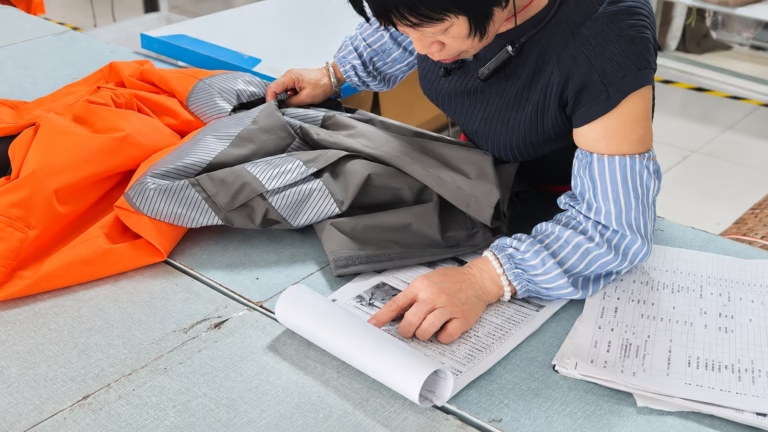
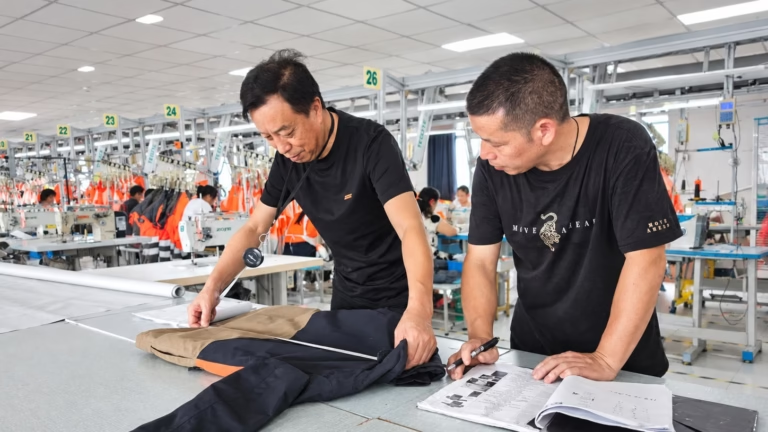
In Varytex development projects, when materials or trims change, earlier test data is reviewed rather than simply carried forward. Internal product information is updated to reflect the new material specification, and the retained sample is updated as well.
This is the difference between having evidence and having evidence that still represents the current product.
The earlier evidence may remain useful. But before relying on it for a procurement or production decision, its relationship to the changed specification needs to be understood.
Not Every Change Has the Same Effect on Earlier Evidence
What matters is not only that something changed, but whether the changed element is related to the property supported by the earlier evidence.
One Varytex project provides a useful example.
A Membrane Change Can Affect the Property Previously Tested
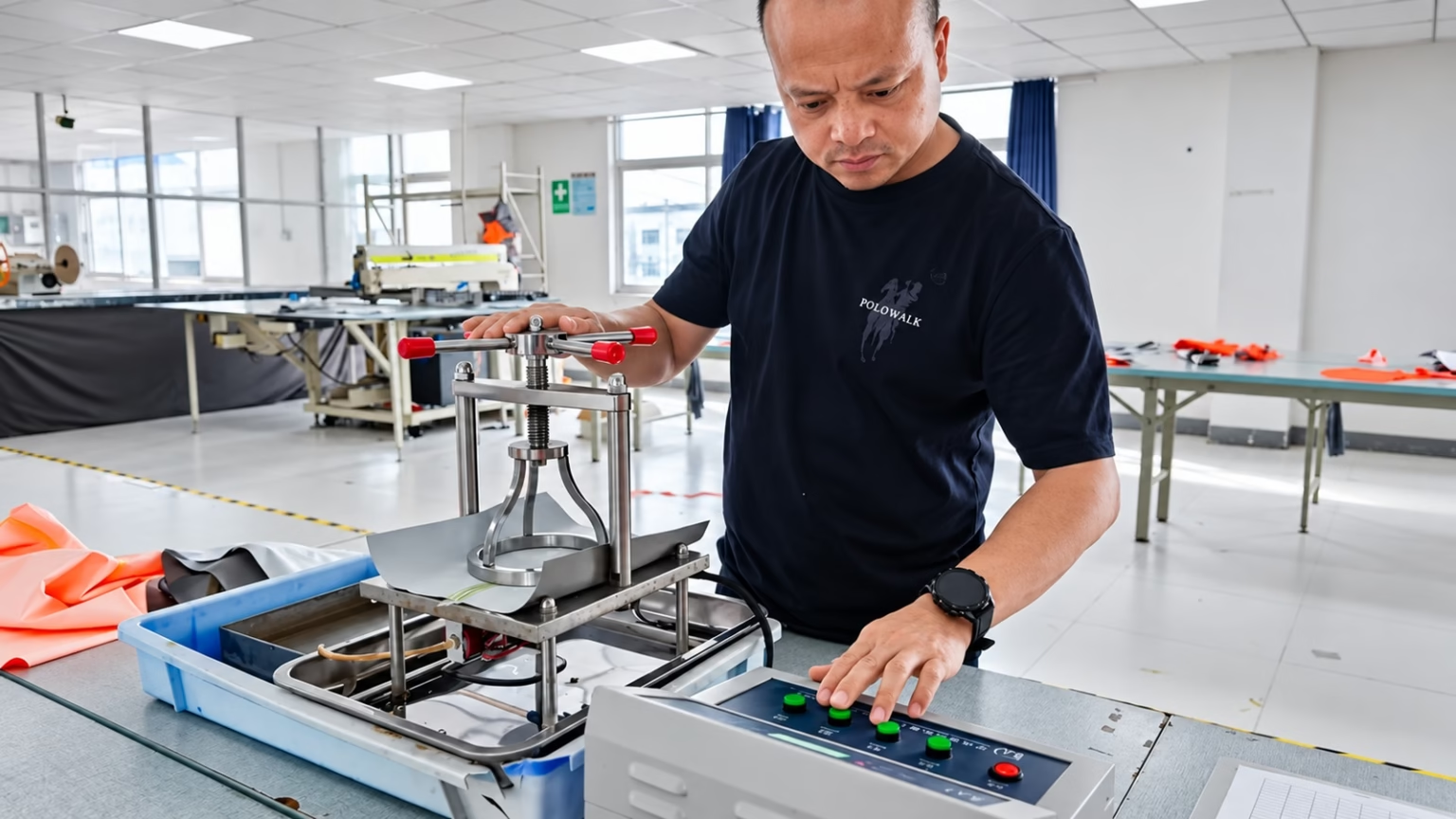
The original fabric used a TPU membrane, with hydrostatic-pressure and breathability data available for that material. During development, the membrane was changed from TPU to TPE.
The membrane itself contributes to the properties represented by those test results. Varytex therefore did not simply carry the earlier TPU data forward to the changed version.
The supplier was first asked to provide the relevant parameters for comparison. After Varytex reviewed the proposed material, the change could be confirmed with the customer. If the customer required additional verification, Varytex could then arrange third-party laboratory testing.
The point is not that every membrane change follows the same validation path. Here, the membrane change mattered because it directly affected the properties supported by the earlier evidence.
That relationship, between what changed and what the evidence was intended to support, is more useful than treating all product changes in the same way.
Reviewing Earlier Evidence Does Not Mean Repeating Every Test
When a material changes, supplier technical information or test data may provide an initial basis for comparison. The relevant parameters can be reviewed against the requirements of the project.
If that does not fully answer the question, the next evidence depends on the property involved.
For properties Varytex can check internally, appropriate internal testing can support the review. If the relevant property cannot be adequately checked internally, third-party laboratory testing may be required.
This is why evidence review should not be reduced to either of two assumptions: that an existing report can automatically be carried forward, or that every previous test must automatically be repeated.
The useful question is narrower:
What additional evidence, if any, is needed to support the decision being made about the changed product?
Sometimes existing evidence remains relevant. Sometimes supplier information helps establish the difference. Sometimes a specific property needs to be checked again.
The answer follows the change and the decision, not simply the fact that a change occurred.
Technical Evidence Does Not Replace Buyer Approval
A different issue appears when a replacement material remains technically acceptable but changes another product characteristic already agreed with the buyer.
Varytex encountered this in a repeat-order project. The original coated fabric could not meet the quantity required for the repeat order because of the supplier’s MOQ, so an alternative coated fabric was proposed.
The supplier’s test information indicated that the relevant parameters were not below the customer’s required range. However, the surface appearance changed from a twill construction to a plain weave.
The technical comparison could support the performance evaluation. It could not decide whether the buyer accepted the different appearance.
A new sample therefore needed buyer confirmation.
This creates an important separation in product development:
Technical evidence can support a performance decision. It does not automatically approve a changed product characteristic on the buyer’s behalf.
Depending on the change, both questions may need to be resolved before the replacement is treated as the production-intended version.
Formal Certification Is a Separate Question
A manufacturer’s development review and a formal certification decision do not carry the same authority.
Where a product is subject to formal certification or regulated conformity assessment, a relevant product change may also need to be handled through the applicable certification or conformity-assessment process. An internal test, supplier report or new laboratory result should not automatically be treated as a determination that an existing certification continues to apply.
That question belongs to the relevant certification or conformity-assessment authority.
What Should a Buyer Check After the Product Changes?
When testing or validation has already taken place and the product later changes, a buyer can narrow the review to five questions.
What changed from the tested or validated version?
Identify the relevant difference in the material, component, construction or specification.
What did the earlier evidence actually demonstrate?
Clarify which property or decision the existing test data or validation was intended to support.
Is the changed element related to that property?
A change directly involved in the tested performance deserves closer review than an unrelated difference.
What evidence now supports the changed version?
Depending on the situation, that may include evidence that remains applicable, supplier information, internal validation or additional third-party testing.
Is there a separate buyer or formal certification decision?
Technical evidence does not replace buyer approval of a changed product characteristic, and formal certification has its own applicable requirements.
The objective is not to generate more testing for its own sake. It is to make sure that the evidence used for a procurement or production decision still corresponds to the product that decision is actually about.
A previous report should not be relied upon simply because it exists. At the same time, a product change should not automatically be treated as a reason to repeat every previous test.
In functional apparel development, keeping those relationships clear helps prevent an earlier test result, a changed specification and the production-intended product from quietly becoming three different things.
See How Varytex Approaches Quality and Validation
Explore how Varytex integrates quality control, in-process verification and functional validation into garment development and manufacturing.