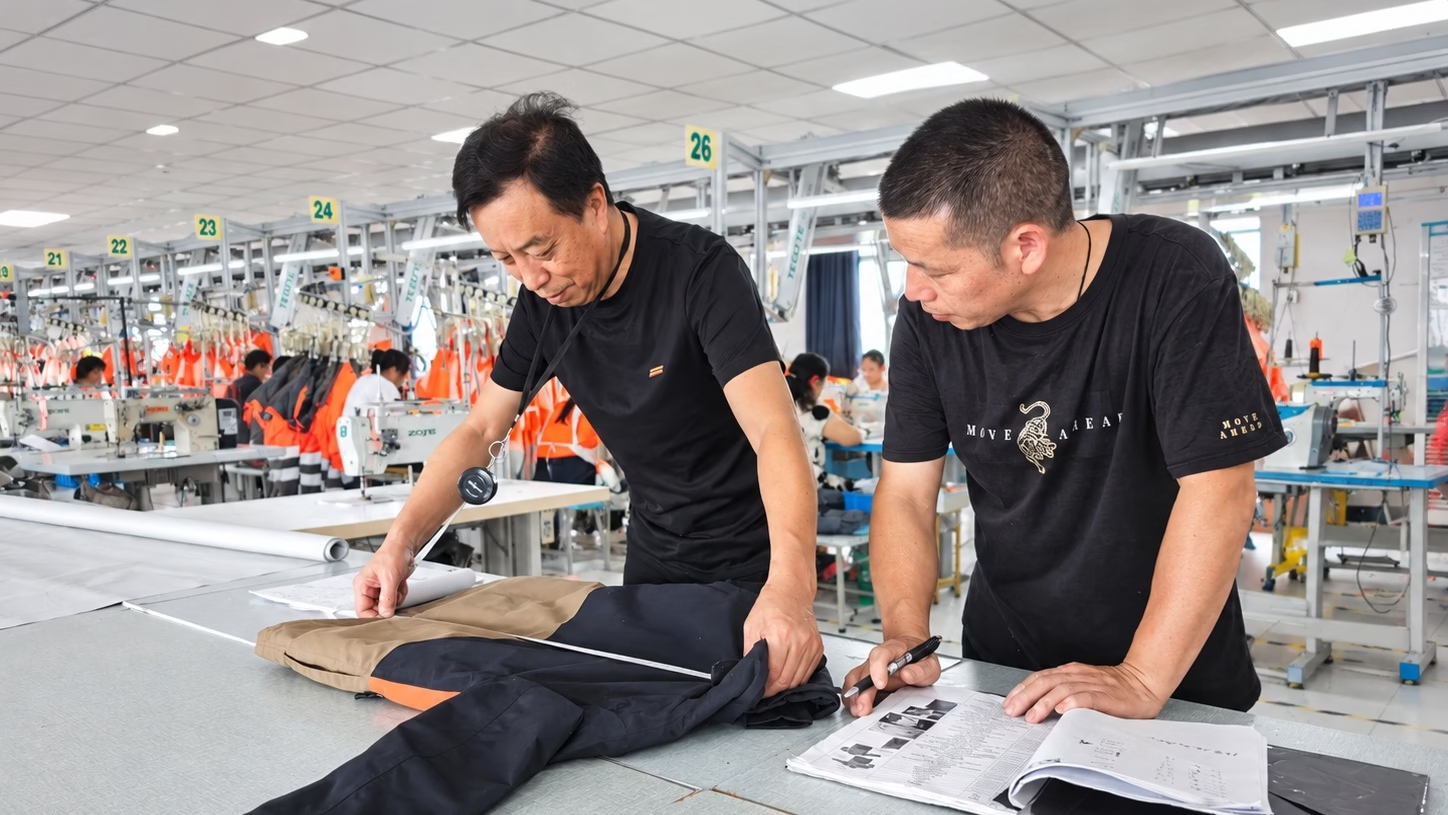
Sample approval is an important milestone in a functional apparel project. It tells both the buyer and manufacturer that key aspects of the garment have been agreed before moving toward production.
But it does not always mean the garment is ready for bulk production.
An approved garment sample confirms an important development result, but production readiness also depends on whether the final materials, specifications, construction references and production instructions are complete and ready to be repeated on the production line.
A sample is still an individual garment made during development. Bulk production has a different requirement: the approved result has to be reproduced by a production line using confirmed materials, specifications and production instructions.
So once a sample is approved, there is another question to answer: is everything behind that sample ready for production?
What Does Sample Approval Actually Confirm?
The answer depends on the project and the stage at which the sample is approved.
In our experience at Varytex, sample approval may confirm the garment’s appearance, construction, measurements, fit and workmanship. For some functional garments, it may also confirm details such as reflective material and its application.
Other production inputs can still be open.
For example, the exact bulk fabric, trims or color may not have been available when the sample was made. In some projects, substitute materials are used during product development and sampling, and the actual bulk materials are submitted for approval later. Labels and packaging information may also still need to be completed.
This does not make the approved sample less important. It simply means that garment approval and production readiness are not always the same milestone.
What Still Needs to Be Confirmed Before Bulk Production?
Before production starts, the remaining details need to be resolved against the final approved garment.
If substitute materials were used for sampling, the actual bulk material specification and color need to be confirmed. Labels and packaging information need to be complete. Any pattern or sample corrections identified during development also need to be reflected in the final production information. Where a pre-production sample is required, that approval also needs to be completed before bulk production begins.
The documents have to agree with the garment as well.
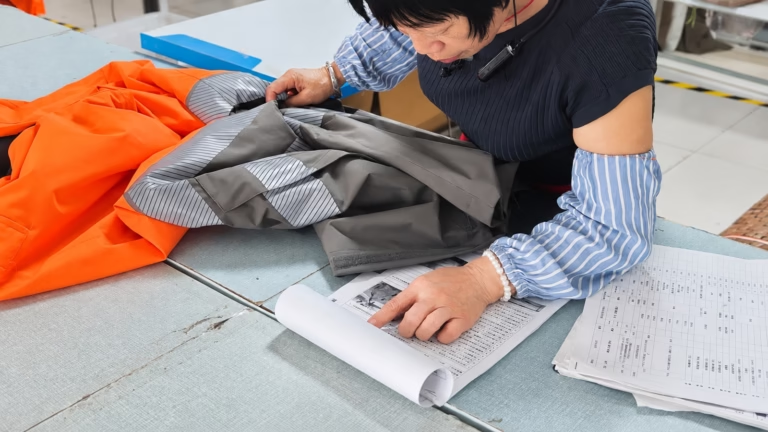
A tech pack, BOM, measurement specification, pattern or workmanship instruction may need to be updated when changes are made during development. The production team therefore needs the correct reference garment together with the latest production information.
Late changes deserve particular attention because they rarely exist in isolation. A seemingly small measurement adjustment can affect zipper length or material consumption. A construction change may require another sample. A material change may mean that the new material needs to be approved again.
The important point is to resolve these details before the production line has to interpret them.
A Good Sample Still Has to Be Translated for the Production Line
The way a sample is made is different from the way bulk garments are produced.
In the sample room, one experienced sample maker may construct most or all of the garment. That person understands the complete product and can spend time adjusting an individual piece when necessary.
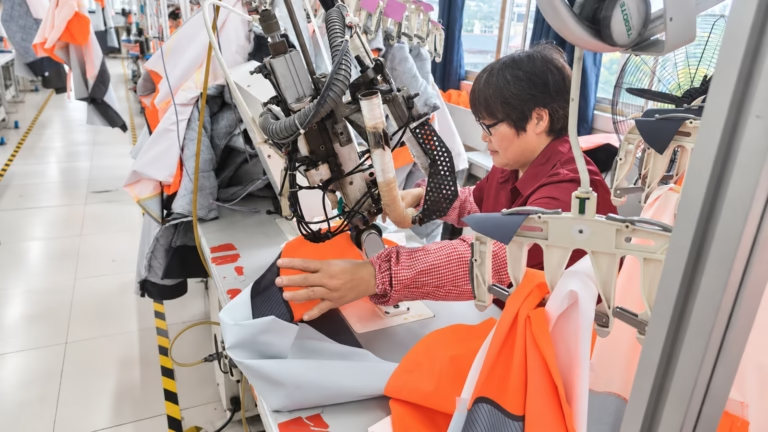
On a production line, the garment is divided into operations. Different operators handle different parts of the construction, often concentrating on a particular operation rather than the whole garment.
The line therefore cannot rely on the sample maker’s personal experience.
The approved result has to be transferred through the reference sample and the production information behind it. Depending on the project, that may include the pre-production sample, tech pack, BOM, pattern, measurement sheet, workmanship instructions, production meeting information and first-piece approval.
This is also where manufacturability can become clearer.
We have seen constructions that an experienced sample maker could complete successfully but that were unnecessarily complicated for line production. The finished sample looked correct, yet the internal construction demanded too much sewing skill to be a practical bulk-production method.
In a case like this, asking operators to copy the sample more carefully does not solve the underlying problem. The construction needs to be reviewed and, where appropriate, adjusted into a method that can be repeated on the production line.
Functional Performance Cannot Always Be Checked by Looking at the Sample
Functional apparel introduces another issue: two garments can look similar without performing in exactly the same way.
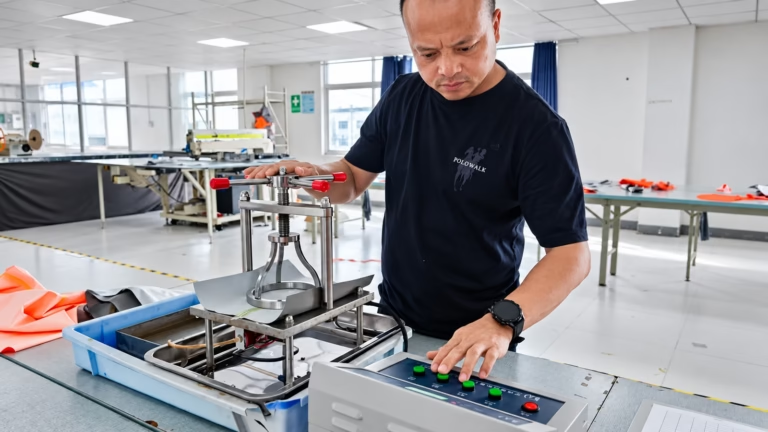
Seam sealing is a good example. Its performance can be affected by the fabric coating or membrane, compatibility with the seam tape, and production settings such as temperature, speed and pressure.
A sealed seam can therefore look acceptable without its appearance alone confirming adhesion or hydrostatic performance.
The same principle matters when looking at material test results. A fabric meeting a hydrostatic-pressure requirement does not by itself prove that the sewn and sealed garment construction will achieve the required performance. The finished construction may need appropriate testing and validation according to the project requirement.
This becomes particularly relevant if the main fabric changes. Previous performance data may no longer apply directly to the new material and construction combination.
For bulk production, visual consistency with the approved sample is important, but it cannot be the only reference for performance-sensitive details.
Sometimes the Specification Needs to Be Corrected Before Production
There is another part of production readiness that is easy to overlook: the buyer’s specification is also an input that may need verification.
A measurement table, grading requirement or construction detail can look reasonable in a document but create a problem when the pattern is made or graded across sizes. An artwork or application method can also look good on screen but prove impractical or affect the garment’s function when it is actually developed.
If this kind of issue becomes apparent during development, it needs to be discussed before it becomes a bulk-production instruction.
The same applies to information that is not part of the garment construction itself.
In one waterproof garment project, the workmanship, materials and measurements had been approved, but the care-label information supplied by the buyer was later found to be incorrect. It had been taken from a template that was not suitable for that particular product.
The correct labels had to be remade and the incorrect ones replaced while trying to minimize the resulting production loss.
The useful lesson from this case is broader than label checking. Information supplied by the buyer also becomes part of the production basis, and approval of the physical sample does not automatically verify every piece of information associated with the order.
From Sample Approval to Production Readiness
An approved sample is an essential production reference, but the next step is to make sure the garment behind that sample has become a complete and workable production basis.
The final materials need to match what has been agreed. Measurements, patterns, workmanship information and other production documents need to correspond with the correct reference garment. Any construction that worked in the sample room still has to be practical for line production. For functional garments, performance-sensitive details may also require validation beyond visual comparison.
After approving the sample, it is therefore worth asking one more question:
“Are the materials, specifications, construction references and production instructions now ready for bulk production?”
That is the point at which an approved sample becomes much more useful as a basis for repeatable manufacturing.
Preparing a Functional Apparel Project for Production?
If you already have a sample, tech pack or product specification, share your project requirements with Varytex. We can review the current development stage and discuss what needs to happen before the next sampling or production step.