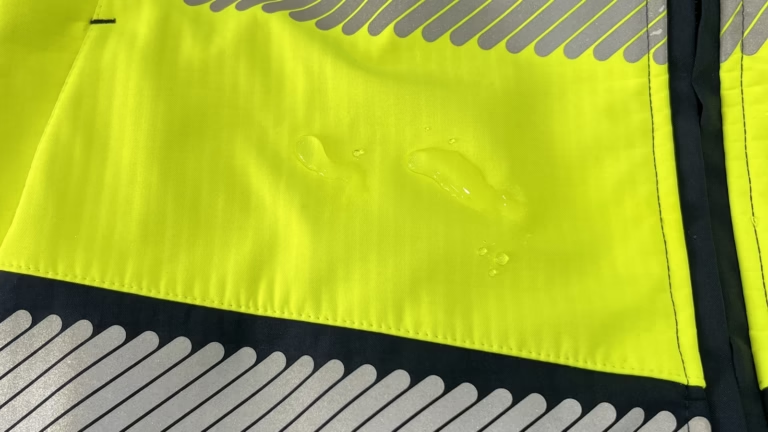
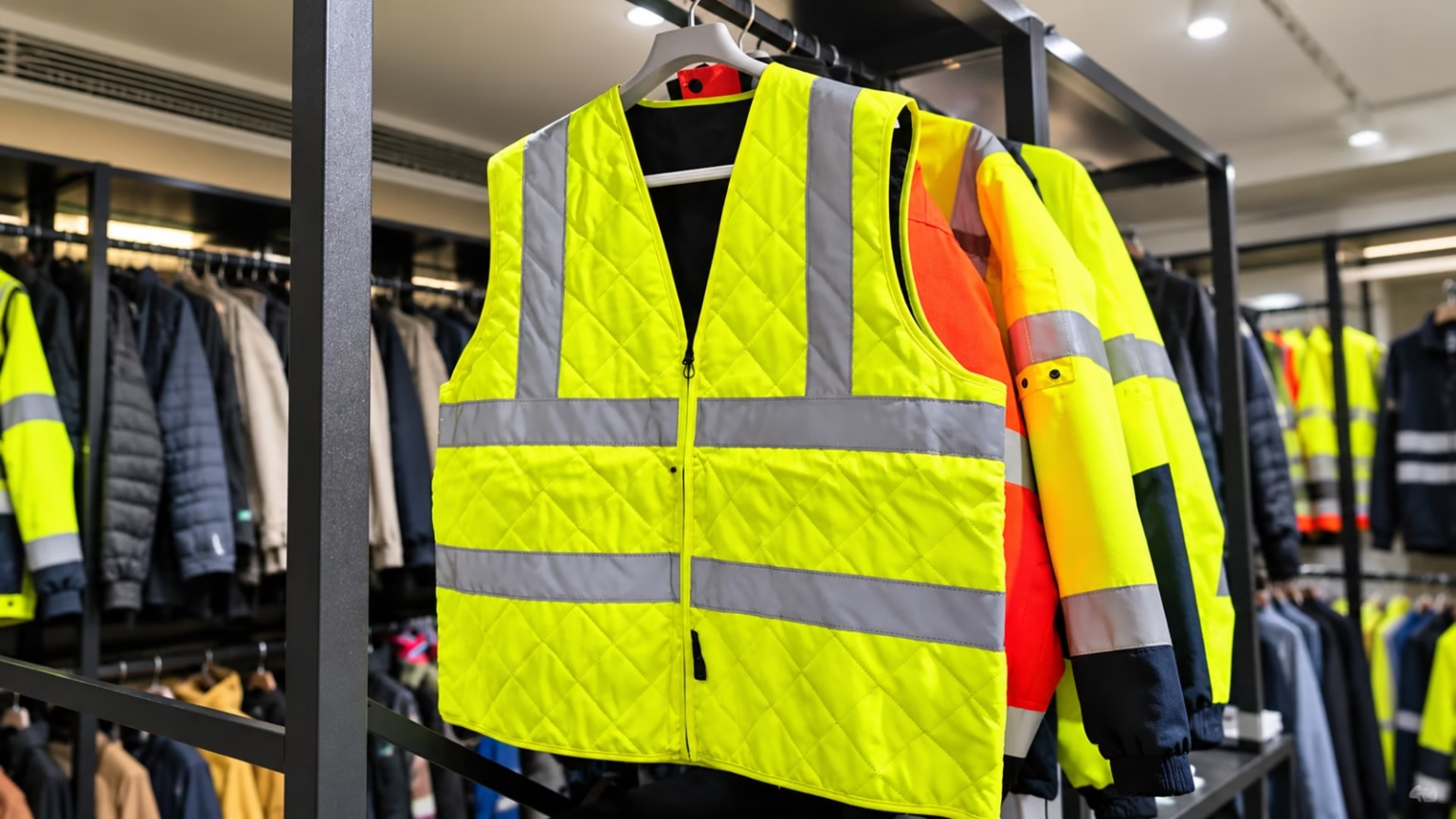
A fabric can feel noticeably cool when touched and still present problems when it is made into a work shirt, stretch garment or cooling vest.
The difficulty is not always the cooling material itself. It may be the way that material is used, how the garment is assembled, or whether the available test results actually support the performance expected from the finished product.
Before approving cooling apparel for production, buyers should verify the cooling mechanism, the selected fabric or cooling system, garment construction, processing compatibility, and the test evidence supporting each performance requirement.
Varytex has developed contact-cooling shirts, T-shirts, polo shirts and work trousers, as well as evaporative cooling vests using superabsorbent fiber (SAF). These projects have included bulk orders and repeat business, along with material-selection decisions, construction revisions and processing problems identified during development.
Several of those experiences illustrate what buyers need to examine beyond a cooling-fabric specification.
First, Define What the Cooling Apparel Must Actually Do
Cooling apparel can refer to garments that work through different mechanisms.
Contact-cooling fabrics transfer heat rapidly when they first touch warmer skin, producing an immediate cool-to-the-touch sensation. Q-max testing measures maximum heat flux during initial contact under specified laboratory conditions.
Evaporative cooling garments use water retained in a material or garment system. As that water evaporates, it absorbs heat. The effect depends on water availability, temperature, humidity, airflow and the garment’s construction.
The distinction changes the development requirements.
For a contact-cooling polo shirt, buyers may need to evaluate fabric composition, stretch, cooling measurements and compatibility with printing or other decoration.
A water-activated SAF vest presents different questions. How much water does the absorbent layer retain? Which materials face the wearer? How is the absorbent core assembled? Under what conditions is the finished vest expected to provide cooling?
Before selecting materials, buyers should establish whether they need an immediate cooling sensation, evaporative cooling after wetting, or cooling functionality combined with other requirements such as UV protection or high visibility.
Those decisions determine which materials, constructions and tests are relevant.
Material Selection Must Account for More Than Cooling Performance
Varytex has worked with several contact-cooling fabric constructions in customer projects, including:
- 88% cooling nylon / 12% spandex knitted jersey.
- 92% cooling nylon / 8% spandex four-way-stretch woven fabric.
- 88% cooling polyester / 12% spandex fabric.
These fabrics are not interchangeable simply because they are described as cooling materials.
A work trouser may require a different combination of stretch, weight, abrasion resistance and construction from a polo shirt. Fluorescent-color garments introduce additional material-selection considerations, particularly where protective or visibility requirements apply.
Cost also affects which material is practical for a particular project.
During cooling-garment development, Varytex has encountered situations in which fluorescent color, cost and other specifications influenced fabric selection. This experience does not establish that nylon is universally better than polyester, or that one fiber type will always deliver higher cooling performance.
The appropriate material depends on the complete garment specification.
When comparing candidate fabrics, buyers should examine composition, construction, weight, stretch, color and the functional measurements relevant to the intended product.
They should also check whether the available results relate to the actual fabric being selected. Data for a cooling yarn, a different fabric construction or another supplier’s sample cannot automatically establish the performance of the chosen material.
Garment Construction Can Change the Development Outcome
Layer Construction in an Evaporative Cooling Vest
In one evaporative cooling vest project, the customer initially proposed using uncoated fabrics on both the outer and wearer-facing sides.
During sampling, Varytex identified a concern with the wearer-facing construction and proposed a different material arrangement intended to reduce direct wetness against the body.
The developed vest used three main layers:
- An uncoated 300D Oxford outer fabric.
- An SAF absorbent middle layer.
- A 300D stretch Oxford wearer-facing fabric laminated with a breathable TPU film.
The SAF layer was the water-absorbing component. The wearer-facing fabric was selected as part of a construction intended to manage direct contact with moisture.
This required the team to consider two different aspects of the product: how the garment retained water for evaporative cooling and how the wetted construction would interact with the wearer.
The customer reviewed and approved the revised sample construction.
That approval confirms the agreed design approach. It does not establish a measured improvement in cooling power, cooling duration or wearer temperature. Those outcomes would require appropriate finished-garment testing.
For buyers developing an SAF vest, the position of the absorbent layer and the construction facing the wearer deserve as much attention as the absorbent material’s own specifications.
A Seam Construction That Was Difficult to Sew
The same vest project presented a separate manufacturing problem.
The original joining-seam construction used an additional fabric strip wrapped around the seam. During development, the arrangement proved difficult to sew and produced an unsatisfactory appearance.
Varytex prepared an alternative construction using overlapping fabric and made a mock-up for the customer to review.
The customer accepted the revised approach.
This was not a change to the cooling material. It was a change to the way the garment could be assembled.
A layered cooling system may use suitable materials while still presenting difficulties at its joining seams. Bulk, sewing access, workmanship and construction consistency all matter when an absorbent core and different outer materials must be joined.
The approved sample should therefore establish the actual seam construction intended for production, not merely the list of materials.
Heat-Transfer Printing on Stretch Cooling Fabric
Another project involved a contact-cooling garment with a heat-transfer print.
The selected fabric had the required stretch, but the original transfer material did not accommodate that movement adequately. Cracking and local peeling appeared when the printed fabric was stretched and washed.
Varytex worked with the transfer-material supplier to investigate the problem.
The development team adjusted application temperature, time and pressure and selected a transfer film more compatible with the stretch fabric.
According to the owner-confirmed development record, the reported cracking and peeling problem was resolved through these changes.
For buyers, the relevant approval item is the decorated material, not just the unprinted fabric. A heat-transfer design should be evaluated on the actual selected fabric under relevant stretching and washing conditions before the decoration process is approved for production.
The available project record does not establish a specific standardized wash-test rating or quantified durability result.
What Can Cooling Apparel Test Reports Actually Prove?
A test report becomes useful when the buyer knows exactly which sample was tested, under what conditions, and which performance requirement the result addresses.
For one contact-cooling fabric project, Suzhou Varytex Co., Ltd. commissioned SGS testing of a black HY26-18-B knitted jersey containing 88% cooling nylon and 12% spandex.
SGS report SL32603343368701TX, dated August 18, 2026, recorded an average Q-max of 0.270 W/cm² for the tested fabric.
The complete four-page SGS test report (PDF) is available for reference. The results apply to the specific fabric sample tested under the stated conditions.
The measurements were taken on the back side of the sample, as received, using a temperature difference of 20°C under laboratory conditions of 20 ± 2°C and 65 ± 4% relative humidity.
Q-max describes heat transfer during initial contact. The reported value does not demonstrate that a person wearing a garment made from the fabric will experience a 4–5°C reduction in skin or body temperature.
It also does not establish how the cooling measurement changes after repeated washing.
The SGS report identifies the Q-max testing as outside the stated CNAS accreditation scope. The result should not be described as a CNAS-accredited Q-max measurement.
UPF Is a Separate Performance Requirement
The same SGS report evaluated the black HY26-18-B fabric under EN 13758-1:2001+A1:2006 and recorded a mean UPF of 309, with a reported sample UPF greater than 50.
The report also recorded a PASS result for the UVR protection requirements assessed under Clause 4.2 of EN 13758-2:2003+A1:2006.
These findings concern the tested fabric and the specified assessment. They do not establish that every finished garment using the material satisfies all requirements for UV-protective apparel.
Garment design, stretching, sewing, wetness and wear can affect the protection provided.
Buyers developing cooling apparel with UV protection requirements should confirm which fabric and garment configurations are covered by the available evidence.
Additional Requirements for PPE-Related Garments
Varytex has developed fluorescent-color cooling garments for PPE-related applications.
However, cooling performance, fluorescent color and protective compliance are separate requirements.
The development record available for this article does not include the product-specific certificates or conformity documents needed to substantiate a particular CE marking or EN ISO 20471 compliance claim.
Where protective performance is required, buyers should verify the applicable standard, finished-garment configuration and corresponding conformity documentation separately from cooling-fabric test results. For PPE intended for the EU market, the applicable regulatory framework includes Regulation (EU) 2016/425.
What About Evaporative Cooling Vests?
For an SAF cooling vest, supplier information about the absorbent material can help establish material specifications.
Absorbency data alone cannot determine the cooling duration or temperature reduction of the completed garment.
Finished-vest performance depends on the construction and the conditions under which the garment is activated and worn.
If a buyer needs a quantified cooling duration or cooling effect, the test plan should define the finished garment, water-loading procedure, environmental conditions and measurement method.
Without those details and corresponding results, a numerical finished-vest performance claim remains unverified.
For a broader overview of how testing and inspection fit into garment development, see Varytex’s Quality & Testing capabilities.
What Should Buyers Confirm Before Approving Production?
Cooling-apparel sample approval should cover the actual garment configuration, including changes made during development.
| Approval Item | What to Confirm |
|---|---|
| Cooling mechanism | Contact cooling, evaporative cooling or a specified combination |
| Fabric or cooling system | Actual composition, construction, stretch, color, weight and functional requirements |
| Garment construction | Layer arrangement, wearer-facing materials, seams and assembly details |
| Processing compatibility | Prints, heat transfers, trims and other processes on the selected materials |
| Test evidence | Sample identity, test method, conditions, results and the claims they support |
| Additional protection | UV protection, visibility or PPE requirements applicable to the garment |
| Production specification | Approved sample revisions, construction details and unresolved validation items |
The appropriate verification program depends on the product.
A contact-cooling polo shirt with a heat-transfer logo does not require the same evaluation as a water-activated SAF vest. A cooling work garment intended to provide high visibility introduces further requirements.
Changes made during sampling can also affect which evidence remains applicable. A revised transfer film, inner layer or seam construction should be documented, and any affected performance or processing requirements should be reconsidered.
This is particularly important when a buyer intends to rely on an earlier material test after changing the garment or its components. The distinction is discussed further in When Does Test Evidence Need to Be Reconsidered After a Product Change?.
Buyers should be able to identify what has been tested, what has been approved through sampling and what still requires verification.
Before Moving to Bulk Production
A cooling-apparel project is ready for production approval when its material specification, garment construction and applicable validation requirements have been brought into agreement.
A Q-max report can support a contact-cooling fabric claim. A sample review can confirm an agreed construction. Additional evaluation may be necessary for durability, protective performance or quantified evaporative cooling.
These are different forms of evidence, and each should be matched to the requirement it is intended to support.
Varytex works with customers on these decisions through its OEM and ODM development services, including material selection, sampling, garment construction revisions and coordination of project-specific testing requirements.
Planning a Cooling Apparel Project?
Share your intended application, performance requirements and development priorities with our team. We can review the information needed to move your project forward.