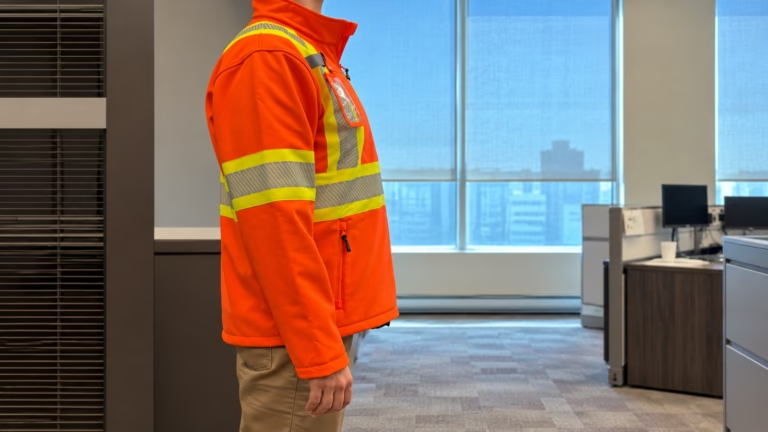
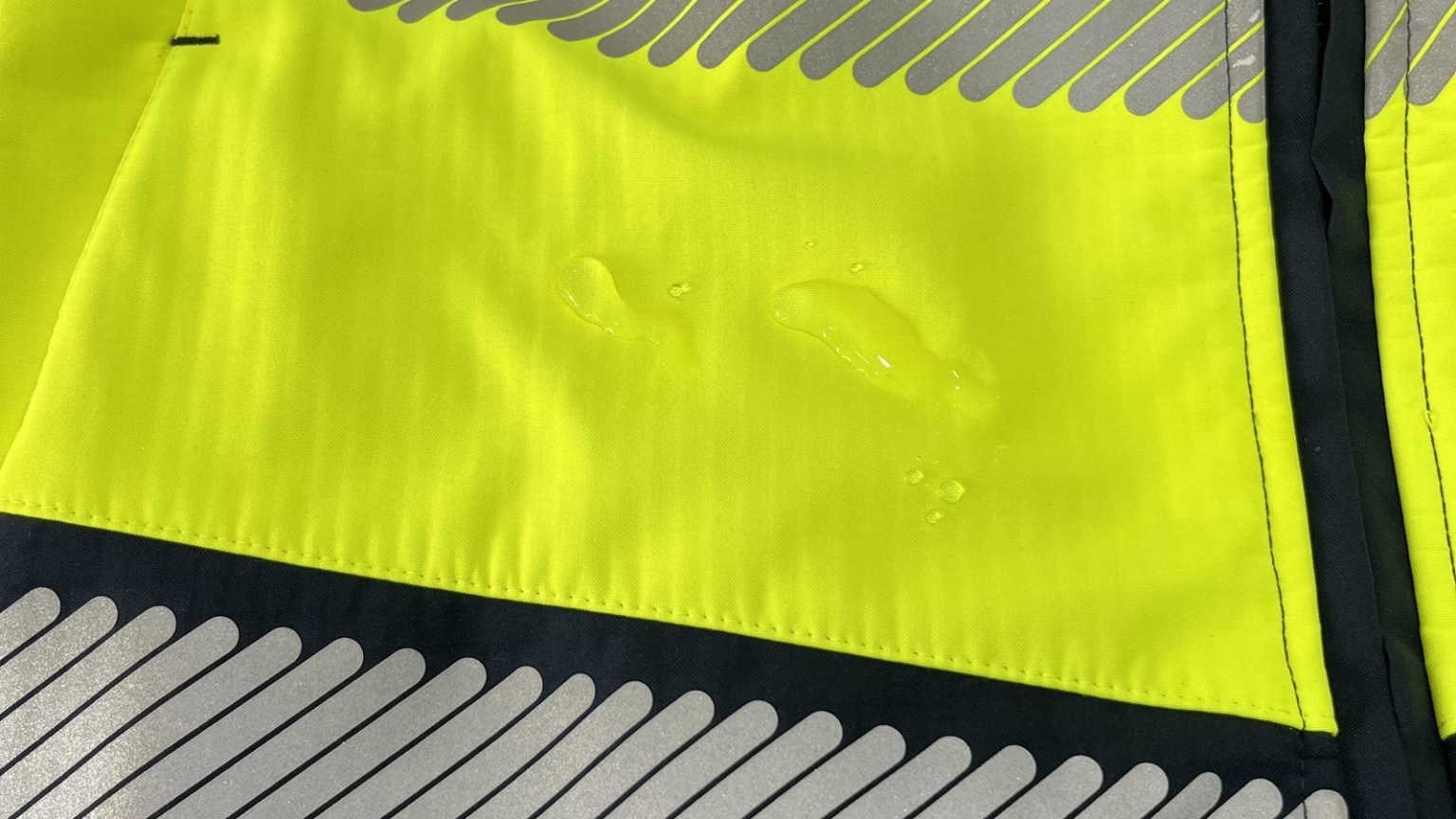
Replacing a durable water-repellent (DWR) finish can change more than the treatment applied to a fabric. It can also change the evidence a buyer needs before accepting the replacement.
The original and replacement materials may both have water-repellency test reports. Yet the reported ratings may not answer the same acceptance question. Differences in test methods, sample preparation, washing history, or evaluation requirements can limit what buyers can conclude from the results.
This matters when a DWR change is introduced to meet a customer’s chemical requirements, adjust material performance, or accommodate a different fabric or finishing solution.
The key question is not simply whether the replacement has a satisfactory water-repellency rating. It is whether the available evidence is sufficient to judge the replacement against the intended product requirements.
For buyers and development teams, the next action depends on what the evidence actually establishes.
Start With the Requirement, Not the Test Rating
Before comparing the original and replacement materials, clarify what the replacement must achieve.
A DWR finish may be changed because of customer specifications, chemical restrictions, performance targets, or material-development considerations. These reasons do not automatically lead to the same testing and approval requirements.
The initial review should establish:
- Required water repellency: What initial performance must the replacement demonstrate?
- Performance after care: Is water repellency required after a specified number of washes or other care treatments?
- Test basis: Which method, conditions, and rating criteria apply?
- Other material properties: Are appearance, color, hand feel, or other functional characteristics part of acceptance?
- Chemical requirements: Is the change intended to satisfy a specific restricted-substance requirement or a documented PFAS-related specification?
- Commercial conditions: Does the replacement meet the buyer’s cost and sourcing requirements?
These requirements may come from the buyer’s specification, supplier documentation, development recommendations, or discussions among the parties.
They should be clarified before a report is treated as evidence of acceptance.
For example, a replacement that meets an initial spray-test requirement may still need further review if the product specification also requires water repellency after repeated washing.
Likewise, a finish selected for chemical-compliance reasons should not be accepted solely because its water-repellency rating resembles that of the original material.
The acceptance requirement determines which evidence matters. The test rating alone does not define acceptance.
Establish What the DWR Test Reports Actually Represent
Water-repellency reports are useful only when their scope and conditions are understood.
A commonly used reference is ISO 4920, which describes a spray test for determining a fabric’s resistance to surface wetting. AATCC TM22 also addresses water repellency through a spray-test method.
These methods evaluate surface wetting behavior under specified test conditions. They should not be interpreted as proof of overall garment waterproofness, seam performance, or suitability for every end-use condition.
When buyers receive reports for an original fabric and a proposed DWR replacement, the review should identify:
| Evidence element | What buyers should verify |
|---|---|
| Test method | Whether the same method and relevant version were used |
| Sample identity | Which fabric construction, finish, and sample each result represents |
| Test condition | Whether relevant preparation and evaluation conditions are documented |
| Washing history | Whether results are initial or post-wash, including the number of wash cycles and applicable procedure |
| Rating basis | Whether the results use compatible grading criteria |
| Acceptance requirement | Whether the reported result addresses the customer’s actual specification |
A difference in reported values does not necessarily mean that one finish is technically inferior. The samples may have been evaluated under different conditions or against different requirements.
Conversely, similar ratings do not necessarily establish equivalent performance.
Why Washing Conditions Matter
Where post-wash water repellency is part of the requirement, the number of wash cycles is important—but it is not the complete washing protocol.
ISO 6330 provides domestic washing and drying procedures for textile testing. A report referencing washing must still identify the relevant procedure and conditions so that the test history can be understood.
Two reports showing results after the same number of washes should not automatically be treated as directly comparable if other relevant washing or evaluation conditions are unknown.
If the report does not establish the required basis, the buyer should request clarification rather than assume equivalence.
Match the Evidence Problem to the Next Action
Not every DWR replacement review requires the same response.
The practical decision is to identify the evidence problem first, then select an action that addresses that problem.
| Evidence status | What it means | Appropriate buyer action |
|---|---|---|
| Incomplete Evidence | Required report details or acceptance information are missing | Request the missing information |
| Non-Comparable Evidence | The available results cannot support a reliable comparison on the required basis | Establish a common testing basis and retest where necessary |
| Comparable but Below Requirement | Results can be assessed against the requirement, but the replacement does not meet it | Reassess the replacement, specification, or development approach |
| Comparable and Meets the Tested Requirement | The tested requirement is satisfied on an appropriate evidence basis | Review remaining material, chemical, commercial, and customer-approval requirements |
This is a buyer-oriented decision framework, not a prescribed sequence from ISO or AATCC and not a representation of a formal Varytex standard operating procedure.
1. Incomplete Evidence → Request Missing Information
An incomplete report may contain a test result without enough supporting information to establish what was tested or whether it meets the required conditions.
For example, a reported water-repellency grade may lack a clear reference to the sample, test method, or post-wash procedure.
The immediate action is not necessarily another test.
First, request the missing information from the relevant fabric supplier, finishing supplier, or testing party.
A clarification may resolve the uncertainty without repeating work. If the necessary evidence cannot be recovered, additional testing may then be appropriate.
2. Non-Comparable Evidence → Establish a Common Testing Basis
Non-comparable evidence is different from simply having different test values.
The issue is that the available results do not establish a sufficiently consistent basis for the acceptance decision.
The appropriate response is to identify the comparison gap and determine whether the original and replacement materials need to be evaluated using an agreed method and relevant conditions.
Varytex has encountered situations during actual DWR replacement development in which the available test results could not be directly compared. In those situations, the development response included requesting retesting using the same test method and arranging additional sample or fabric testing.
This experience illustrates an important distinction: when the existing evidence cannot answer the comparison question, the development team may need to improve the evidence before deciding whether the replacement is acceptable.
It does not establish that every difference between reports requires retesting, nor does it identify a universal technical cause of non-comparability.
The test scope should be selected according to the buyer’s requirements and the information missing from the original review.
3. Comparable but Below Requirement → Reassess the Replacement
Once results can be assessed on an appropriate basis, a replacement may still fail to meet the required performance.
At this point, the issue is no longer merely insufficient evidence.
The development team may need to review the finish, fabric selection, processing approach, or the feasibility of the proposed requirement.
A lower result does not automatically make a replacement unacceptable in every application. However, any revised acceptance criterion must be agreed with the customer rather than assumed by the supplier.
If the specified requirement remains unchanged, a result below that requirement should not be presented as compliant.
4. Comparable and Meets the Tested Requirement → Review What Remains
Meeting the relevant water-repellency requirement is a positive result, but it does not necessarily complete replacement approval.
The review may still need to address:
- Appearance, color, and hand feel
- Other required fabric or garment performance
- Chemical and restricted-substance requirements
- Price and commercial feasibility
- Sample approval and customer authorization
A water-repellency test cannot independently verify chemical composition or regulatory compliance.
Similarly, successful fabric-level testing does not establish every aspect of finished-garment performance.
The correct conclusion is therefore limited: the replacement meets the tested requirement under the documented conditions. Any broader approval depends on the remaining requirements.
Ask the Supplier for the Evidence Needed to Make the Decision
A useful supplier request should be specific enough to close the actual evidence gap.
Instead of asking whether the replacement is “the same as the original,” buyers can ask for the information needed to evaluate the proposed change.
| Buyer question | Why it matters |
|---|---|
| Which exact fabric and finish were tested? | Connects the report to the proposed replacement |
| What method and version were used? | Establishes the technical basis of the result |
| Were the original and replacement samples tested under equivalent relevant conditions? | Helps determine whether the results can be compared |
| What washing or care procedure preceded the post-wash test? | Clarifies durability-related evidence |
| Which customer requirement does each result address? | Connects test evidence to acceptance |
| Are additional samples or repeat tests needed? | Identifies how to resolve remaining uncertainty |
| What documentation supports chemical-compliance claims? | Separates chemical evidence from water-repellency performance |
Not every project requires every document or test.
The purpose is to avoid collecting reports that do not resolve the buyer’s decision.
Where a replacement is being considered because of PFAS-related requirements, buyers should request documentation relevant to the actual substances, applicable restrictions, and specified compliance scope.
Terms such as C0, C6, non-fluorinated, and PFAS-free should not be treated as interchangeable evidence of chemical compliance or as universal predictors of water-repellency performance.
The appropriate chemical documentation and performance tests serve different purposes.
Balance Performance, Material Properties and Commercial Requirements
DWR replacement decisions rarely depend on one test result alone.
In practical material development, the original and replacement fabrics may differ in appearance or hand feel even when the intended water-repellency performance is achieved.
Varytex’s DWR development experience includes evaluating initial and post-wash water repellency alongside fabric appearance and hand feel. Changes in color have also been identified as a possible consideration during replacement evaluation.
Price and the required water-repellency grade are additional inputs when discussing whether a proposed material is suitable for the customer’s requirements.
These factors create trade-offs that cannot be resolved by a single spray-test rating.
For example, a technically acceptable water-repellency result may still require customer review if the fabric appearance changes. A material that addresses a chemical requirement may also need additional performance validation.
The development task is to make those differences visible and support an informed acceptance decision, not to imply that all replacement materials must perform identically in every respect.
Keep the Technical Review Connected to Customer Approval
A supplier can provide test results, development recommendations, and alternative material options.
However, technical review and customer approval are not the same decision.
The customer may establish the original performance specification, participate in discussions about alternatives, and decide whether a proposed change is acceptable in the context of the intended product.
The manufacturer can help clarify the evidence, identify performance or appearance differences, and coordinate further evaluation where required.
A practical review record should make clear:
- What material or DWR finish is proposed to change
- Why the change is being considered
- Which requirements remain applicable
- What the available test evidence establishes
- Which uncertainties or deviations remain
- Whether additional testing or sample review is required
- What the customer has approved, and within what scope
This is especially important when the material change occurs during development or sampling, before the final product configuration is agreed.
The objective is not simply to accumulate test reports. It is to connect material evidence to a clear customer decision.
For a broader discussion of how evidence should be reviewed when product specifications change, see What Test Evidence Is Needed After a Product Change?.
For the distinction between fabric-level water resistance and finished-garment performance, see Why a Waterproof Fabric Test Does Not Prove Garment Performance.
Conclusion: Resolve the Evidence Gap Before Approving the Replacement
When a DWR finish changes, buyers should not assume that two available test reports are sufficient to establish equivalence.
Start with the acceptance requirement. Confirm what the reports actually measure. Identify whether the evidence is incomplete, non-comparable, below requirement, or sufficient for the specific tested requirement.
Then take the action appropriate to that evidence status.
Sometimes the next step is a document clarification. Sometimes it is retesting under a common method or arranging additional sample evaluation. In other cases, the replacement itself or the customer’s acceptance criteria require further discussion.
The goal is not to obtain matching numbers. It is to obtain evidence that supports a defensible material-selection and approval decision.
Varytex supports functional-apparel development through material evaluation, manufacturing coordination, and quality-related review. Learn more about our Quality & Testing capabilities.
Technical References
- ISO 4920:2012 — Textile fabrics — Determination of resistance to surface wetting (spray test)
- AATCC TM22-2024 — Water Repellency: Spray Test
- ISO 6330:2021 — Textiles — Domestic washing and drying procedures for textile testing
- Commission Regulation (EU) 2024/2462 — PFHxA-related restrictions
- Hohenstein — PFAS Restrictions and Testing
Reviewing a DWR Replacement Before Approval?
Share your fabric specifications, available test reports and replacement requirements. Our team can help review the evidence and identify what may need clarification or further testing before you move forward.