A workwear sample can meet its specified measurements and still feel restrictive when the wearer raises an arm, reaches forward or turns.
Garment measurements describe dimensions at defined points. They do not, by themselves, show how the garment’s panels, seams and openings will behave when the body moves.
For buyers reviewing workwear samples, this distinction matters. A measurement deviation, a conflict between pattern requirements and a movement-related fit problem may call for different corrections.
What Does a Workwear Measurement Check Actually Confirm?
A measurement check establishes whether a finished sample meets the dimensions and tolerances agreed between the buyer and manufacturer.
Depending on the garment, these may include chest width, sleeve length, shoulder width, garment length, armhole dimensions and other specified points of measurement.
Passing these checks confirms dimensional conformity at the points evaluated. It does not necessarily confirm that the garment will accommodate the movements required in its intended application.
There is another consideration: individual measurements must work together within the pattern.
For example, a customer may specify front and back garment lengths alongside a required difference between the front and back hem positions. Those requirements need to be compatible. If they are not, the pattern maker cannot satisfy all of them simply by following each entry in the measurement table.
A complete specification is therefore not always a fully resolved specification.
For sample review, three questions need to be distinguished:
- Dimensional conformity: Does the sample meet the agreed measurements and tolerances?
- Pattern compatibility: Can the specified dimensions and structural relationships work together?
- Functional fit: Does the resulting garment accommodate the movements expected of the wearer?
A sample may satisfy one of these requirements while needing further review in another.
Why Can Movement Reveal Problems That Measurements Miss?
A garment does not remain in the same position when someone moves.
Raising an arm changes the relationship between the sleeve, armhole, shoulder and body panels. Reaching forward may create tension across the upper body. Turning can reveal restrictions or garment displacement that are not obvious when standing still.
These effects depend on the garment’s construction, not only its overall size.
Armhole shape and depth, sleeve construction, the distribution of movement ease and fabric properties can all influence how a garment responds to movement.
Research on functional garment design has examined the relationship between arm raising, armhole depth and the movement ease required to reach different arm positions. A study published in Sen’i Gakkaishi used garment measurements and motion-capture observations to investigate these relationships. Its findings support considering arm movement when developing the armhole, rather than relying on static dimensions alone.
This does not mean that one armhole shape will work for every garment or wearer.
Similarly, a review of protective clothing design published in Industrial Health identifies garment fit, construction, fabric characteristics and freedom of movement as relevant factors in functional workwear. It also discusses why fitting based only on a stationary standing posture may be insufficient for clothing used during physical tasks.
For buyers, the practical lesson is that making a garment larger is not necessarily the correct response to movement-related feedback.
Adding width may create more room without correcting the relationship between adjoining pattern pieces. Adjusting garment length may improve hem balance without resolving an unrelated restriction around the shoulder.
The appropriate response depends on what happens during fitting, where the problem occurs and what the garment is intended to do.
A workwear sample used for frequent overhead reaching may need different fitting attention from one intended primarily for standing or walking. Relevant movements should therefore be considered as part of the sample review, rather than assuming that an acceptable standing fit covers every working posture.
A Workwear Development Case: When Measurements and Pattern Geometry Did Not Agree
A Varytex high-visibility workwear development project for a construction application illustrates how questions can arise even when the customer has supplied a complete measurement table.
Conflicting requirements identified during pattern development
During pattern-making, the pattern maker found that the specified front garment length, center-back length and required front-to-back hem difference could not all be achieved together as requested.
The issue was identified while developing the pattern. It was not simply a finished garment measurement that had fallen outside tolerance.
The requirements themselves needed clarification.
Varytex discussed the conflict with the customer, and the relevant dimensions were revised.
This distinction is important for buyers. A measurement table can contain all the requested entries while still requiring clarification about how those entries relate to one another.
Identifying that conflict during pattern development gives both parties an opportunity to resolve it before treating the resulting sample as the approved interpretation of the specification.
Fit and construction feedback
The same project also involved feedback concerning garment fit and construction.
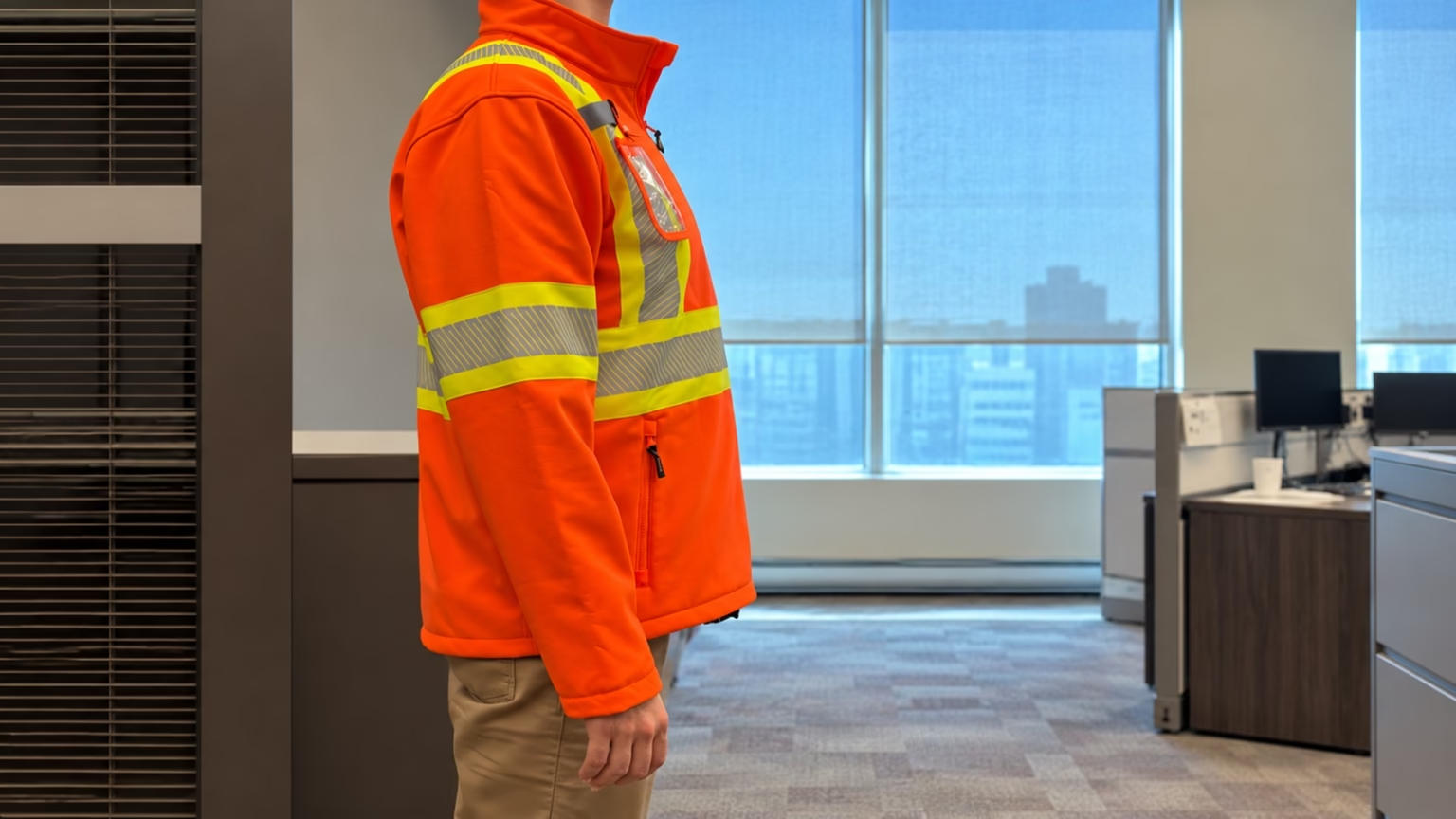
The project questionnaire marked arm raising, forward reaching and turning as relevant movements. It identified concerns involving the shoulder, armhole or underarm area, and neckline, alongside examples of the garment pulling upward during arm movement and tension across the back.
The project record also described an unsatisfactory front-to-back hem balance when the garment was worn. The front hem appeared too short and lifted upward.
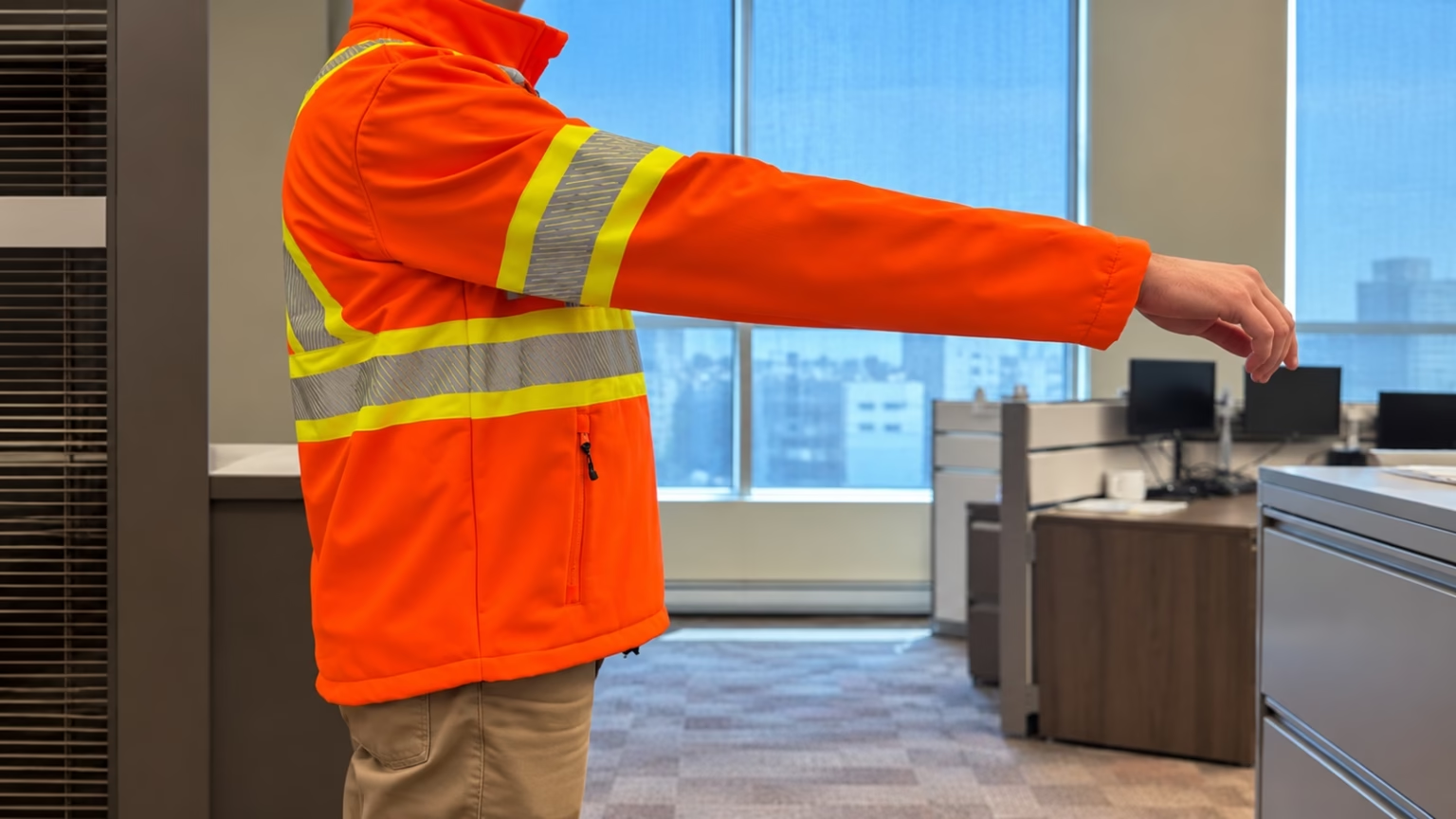
These were qualitative development observations, not results from a standardized movement test. The available record does not establish which individual construction feature caused each concern.
Separately, the customer commented on the appearance of the armhole curve developed from the supplied dimensions and requested an adjustment.
That feedback concerned the pattern’s shape and appearance. Although armhole construction can influence movement, the record does not establish that this particular appearance-related adjustment independently resolved a specific movement restriction.
The project therefore involved several related but distinct questions: whether the dimensions were mutually compatible, whether the garment’s shape met customer expectations and how the garment behaved when worn.
Revision and customer approval
The documented revisions involved the armhole curve, front garment length and lower insert-pocket position.
Varytex also provided DXF pattern files for customer review.
The revised garment was tried on again, submitted for customer confirmation and approved. Varytex subsequently confirmed that the project proceeded to bulk supply.
The available project record does not include a post-revision measurement report or quantified movement results. It would therefore be inaccurate to attribute the overall outcome to one specific adjustment or to claim that every aspect of ergonomic performance was independently verified.
What the case demonstrates is a development process in which conflicting dimensions were identified, construction details were revised and the modified sample was reviewed with the customer before approval.
What Should Buyers Review Before Approving a Workwear Sample?
A useful sample review should establish what has actually been checked and what still needs a decision.
Four questions can help buyers and manufacturers make that distinction.
Are the agreed measurements within tolerance?
Start with the specified points of measurement and the agreed measurement methods.
Check whether the sample meets the applicable tolerances. Where a measurement falls outside the accepted range, determine whether the sample needs correction or the specification itself requires an agreed change.
Record dimensional deviations separately from comments about appearance or movement.
A sample that meets its measurements has passed an important check, but that result should not be treated as evidence of every other fit requirement.
Do the dimensions work together in the pattern?
Consider whether related requirements are compatible.
Garment lengths, hem relationships, armhole shapes and the placement of construction details may affect one another. Changing one requirement can have consequences elsewhere in the pattern.
When the requirements conflict, the buyer and manufacturer should agree on the intended relationship before proceeding.
This may require a revised dimension, an adjusted pattern shape or clarification of how a particular feature should appear and fit.
The purpose is not to replace the customer’s specification with the manufacturer’s preference. It is to make any necessary interpretation or adjustment explicit and subject to customer confirmation.
Has the sample been reviewed during relevant work movements?
A fitting review should reflect the garment’s intended use.
Depending on the application, useful movements may include raising the arms, reaching forward, turning, bending or other actions associated with the wearer’s tasks.
Feedback is more useful when it identifies the movement, the affected area and what happens to the garment.
For example, saying that the front hem rises when the arms are lifted provides a clearer starting point for investigation than reporting only that the garment feels uncomfortable.
Such an observation does not establish the cause by itself. It helps the development team decide what to examine next.
Not every workwear product requires an identical movement-review procedure. The relevant activities and acceptance expectations should be determined according to the garment and its intended application.
What needs to be reconfirmed after a revision?
A revision may affect more than the feature being changed.
An armhole adjustment may warrant another look at sleeve appearance and movement. A front-length adjustment may affect hem balance or the position of nearby pockets.
The scope of reconfirmation should follow the actual changes made.
Depending on the project, this may involve reviewing updated patterns, checking affected measurements, trying on a revised sample or obtaining explicit customer acceptance.
It is also important to distinguish the records involved. Approval of a DXF pattern, acceptance of a measurement specification and approval of a physical sample do not necessarily confirm the same things.
Before the sample becomes the approved development reference, both parties should understand what has been reviewed, what has changed and what the customer has accepted.
Sample Approval Should Confirm More Than Measurements
A measurement table is essential to workwear development, but it cannot replace pattern review or relevant fitting feedback.
When a sample presents a problem, the first question should not automatically be how much larger or smaller to make it. Buyers and manufacturers need to determine whether the issue concerns dimensional conformity, conflicting pattern requirements or fit during actual movement.
Resolving that distinction before approval helps establish a clearer reference for the next stage of development.
Varytex supports customers through its PPE & Workwear development experience and OEM & ODM capabilities.
For the separate question of maintaining requirements after a sample has been approved, read Why an Approved Garment Sample Does Not Guarantee Bulk Production Consistency.
Technical References
- Ng, R., Cheung, L.-f., & Yu, W. (2008). Dynamic Ease Allowance in Arm Raising of Functional Garment. Sen’i Gakkaishi, 64(9), 236–243.
- Watson, C., Troynikov, O., & Lingard, H. (2019). Design considerations for low-level risk personal protective clothing: a review. Industrial Health, 57(3), 306–325.
Reviewing a Workwear Sample Before Approval?
Share your measurement specifications, fitting feedback and any pattern changes under consideration. Our team can help review the development requirements before you move forward.